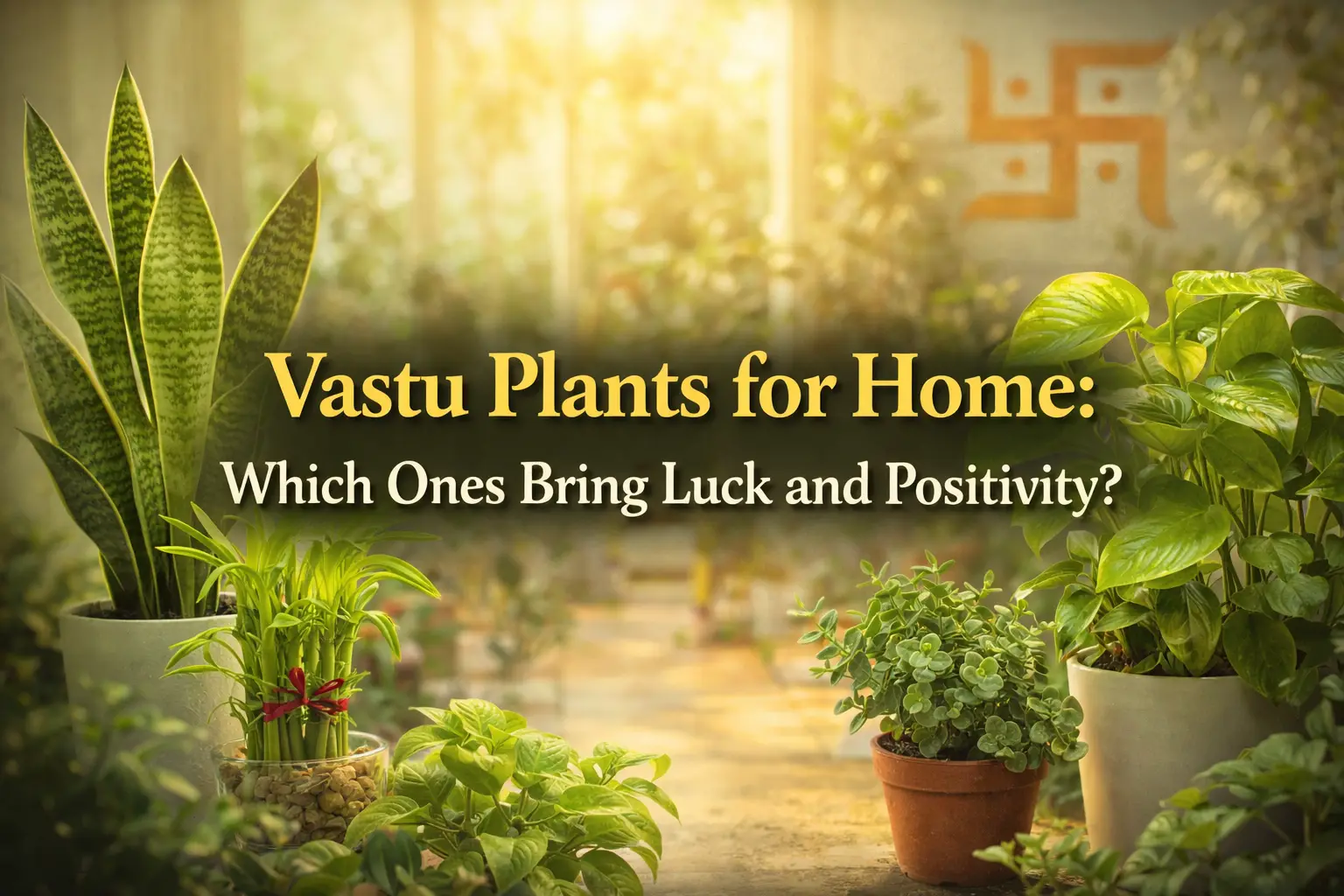
A practical guide to Vastu-friendly plants, ideal directions, entrance placement, common mistakes, and which plants to avoid—so your greenery supports positive energy flow.
You may have carefully designed your home, followed multiple vastu tips for the home, and still feel a lack of balance or positivity in your space. This is more common than most people realize.
In Vastu Shastra for the home, every object carries energy—and plants are among the most powerful energy influencers. They are not just decorative elements but living sources of vibrational energy that can either enhance harmony or disrupt it.
The right plants, when placed correctly, can attract prosperity, improve mental well-being, and create a peaceful atmosphere. On the other hand, incorrect plant choices or placement can unintentionally block positive energy.
In this guide, we will explore the best Vastu plants for the home, their ideal placement, and practical Vastu principles you can apply immediately.
What Are Vastu Plants?
Before choosing plants for your home, it is important to understand what makes a plant “vastu-friendly.”
Vastu plants are those that are believed to attract positive energy, promote growth, and balance the natural elements within a space when placed according to Vastu Shastra for home principles.
- energy characteristics
- growth pattern
- direction suitability
- symbolic meaning in Vastu
These plants are selected based on their:
Unlike regular indoor plants, vastu plants are chosen with intention. Their purpose goes beyond aesthetics—they are used to influence the energy flow within your home.
Why Are Plants Important in Vastu Shastra for the home?
Plants represent the wood element, which is associated with growth, expansion, and life force energy. In Vastu, balancing the five elements—earth, water, fire, air, and space—is essential for harmony, and plants play a key role in maintaining this balance.
- improve the quality of indoor energy
- reduce stress and mental fatigue
- support emotional stability
- enhance prosperity and growth
When placed correctly, plants can:
This is why Vastu experts often recommend incorporating plants as a simple yet powerful remedy for energy imbalance.
However, the effectiveness of plants depends heavily on selecting the right types and placing them in the correct directions.
7 Best Vastu Plants for Home That Bring Luck and Positivity
Choosing the right plants is not just about popularity—it is about how their energy aligns with your space. Below are some of the most recommended Vastu plants for the home, along with their benefits and ideal placement.
Tulsi (Holy Basil)
Tulsi is considered one of the most sacred plants in Indian households and holds a strong spiritual significance in Vastu Shastra for the home. It is believed to purify the environment and attract divine energy.
Keeping Tulsi at home is associated with peace, positivity, and spiritual growth. It also contributes to a calm and balanced atmosphere.
Ideal placement: North, East, or Northeast direction. It is especially beneficial in Vastu for the home entrance, where it helps purify incoming energy.
Money Plant
The money plant is widely associated with financial prosperity and abundance. In Vastu, it is believed to attract wealth and improve cash flow when placed correctly.
It is also known for maintaining a smooth flow of positive energy within the home, making it a popular choice for both residential and office spaces.
Ideal placement: Southeast direction, which is linked to wealth and financial energy.
Lucky Bamboo
Lucky bamboo is often associated with growth, success, and harmony. It is commonly used in Vastu and feng shui practices due to its symbolic representation of steady progress.
The number of stalks in the plant can represent different aspects of life, such as wealth, health, or happiness.
Ideal placement: East or Southeast direction to promote growth and prosperity.
Snake Plant
The snake plant is known for its strong protective energy. It helps absorb negative vibrations and is often considered a natural energy shield for the home.
It is also low maintenance, making it suitable for modern indoor spaces.
Ideal placement: South or East direction to balance protective energy.
Aloe Vera
Aloe vera is valued not only for its healing properties but also for its ability to attract positive energy. In Vastu, it is believed to remove negative influences and promote overall well-being.
It is especially useful in creating a healthy and calm indoor environment.
Ideal placement: North or East direction.
Neem Tree
Neem is known for its strong purifying qualities. It is believed to protect the home from negative energies and harmful influences.
Due to its size, it is best suited for outdoor placement, such as in gardens or near the entrance.
Ideal placement: Open outdoor areas with proper sunlight.
Peace Lily
Peace lily is associated with calmness, emotional balance, and mental clarity. It helps create a peaceful environment and is often recommended for bedrooms or living spaces.
Its soft and soothing energy makes it ideal for reducing stress.
Ideal placement: Indoors, especially in bedrooms or living rooms.
Vastu Placement Guide for Plants
Choosing the right plant is only half the process. Placement plays an equally important role in ensuring that the plant’s energy benefits your home.
In Vastu Shastra for home, different directions are associated with specific types of energy. Aligning plants with these directions enhances their effectiveness.
| Direction | Recommended Plants | Benefit |
|---|---|---|
| North-East | Tulsi | Spiritual growth and clarity |
| South-East | Money Plant | Wealth and financial stability |
| East | Bamboo, Snake Plant | Health and growth |
| North | Aloe Vera | Positivity and healing |
Incorrect placement can reduce or even reverse the benefits, which is why direction should always be considered carefully.
Vastu for Home Entrance: Which Plants Should You Keep?
The entrance of your home is one of the most important areas in Vastu, as it is the primary point through which energy enters.
Plants placed at the entrance should enhance positivity and create a welcoming environment. They should always appear fresh, healthy, and well-maintained.
Plants like Tulsi, bamboo, and money plant are considered suitable for entrances as they promote good energy flow.
At the same time, it is important to avoid plants that carry negative or restrictive energy. Thorny plants, dried plants, or poorly maintained greenery can disrupt the energy entering your home.
Plants to Avoid According to Vastu Shastra
While many plants bring positivity, some are believed to create imbalance or block growth.
Plants with thorns, such as cactus, are often associated with tension and conflict. Similarly, bonsai plants, despite their aesthetic appeal, symbolize restricted growth and are not recommended in Vastu.
Dead, dried, or unhealthy plants should also be removed immediately, as they represent stagnation and negative energy.
Choosing the right plants is not just about what to include, but also about what to avoid.
Common Vastu Mistakes People Make with Plants
Many people unknowingly reduce the positive impact of plants by making simple mistakes.
One of the most common issues is placing plants in the wrong direction without understanding Vastu principles. Overcrowding indoor spaces with too many plants can also disrupt energy flow instead of improving it.
Another major mistake is neglecting plant health. Dry leaves, dying plants, or artificial plants do not contribute to positive energy and should be avoided.
To benefit from vastu plants, consistency and care are just as important as selection.
Benefits of Keeping Vastu Plants at Home
When chosen and placed correctly, vastu plants can significantly improve the overall energy of your home.
They help create a balanced environment that supports mental clarity, emotional stability, and physical well-being. Many people also associate them with improved financial flow and better relationships.
While the effects may not always be immediate, consistent alignment with Vastu principles can create noticeable positive changes over time.
Latest Trends in Vastu Plants (2025–2026)
In recent years, there has been a growing interest in combining traditional Vastu principles with modern interior design.
Homeowners are now focusing on minimalist plant placements instead of overcrowding spaces. Indoor plant styling is being aligned with Vastu directions to ensure both aesthetic appeal and energy balance.
There is also a rise in demand for personalized Vastu consultations, where plant placement is customized based on the home layout and individual energy needs.
FAQs: Vastu Plants for Home
Which is the best Vastu plant for the home?
Tulsi is widely considered the most powerful plant for attracting positivity and spiritual energy.
Can we keep a money plant inside the house?
Yes, it is highly recommended, especially in the Southeast direction for financial growth.
Which plants should not be kept at home as per Vastu?
Cactus, bonsai, and dried plants should be avoided as they can create negative energy.
Is it good to keep plants at the entrance?
Yes, but only positive plants like Tulsi or bamboo should be placed there.
Do vastu plants really work?
They help improve the environment and influence mental and emotional well-being, especially when combined with proper placement.
Conclusion: Align Your Home with Natural Energy
Your home is more than just a physical structure—it is a space where energy constantly flows and influences your daily life.
By choosing the right Vastu plants for your home and placing them correctly, you can create an environment that supports positivity, growth, and harmony.
Small changes, such as adding the right plant in the right direction, can make a meaningful difference over time.